LED video Walls vs. Projection: Choosing the Right Visual Technology for Your Event
March 27, 2026
When you're planning a major event, one of the most significant technical decisions you'll make involves visual displays. Whether you're organizing a corporate conference, product launch, concert, or trade show, the choice between LED video walls and projection systems will directly impact your event's visual impact and budget.
Both technologies have evolved dramatically over the past decade. What once seemed like a straightforward decision has become more nuanced, with each option offering distinct advantages depending on your venue, audience size, content, and timeline. This guide will help you understand the key differences so you can make an informed choice that aligns with your event's goals.
How LED Video Walls Work
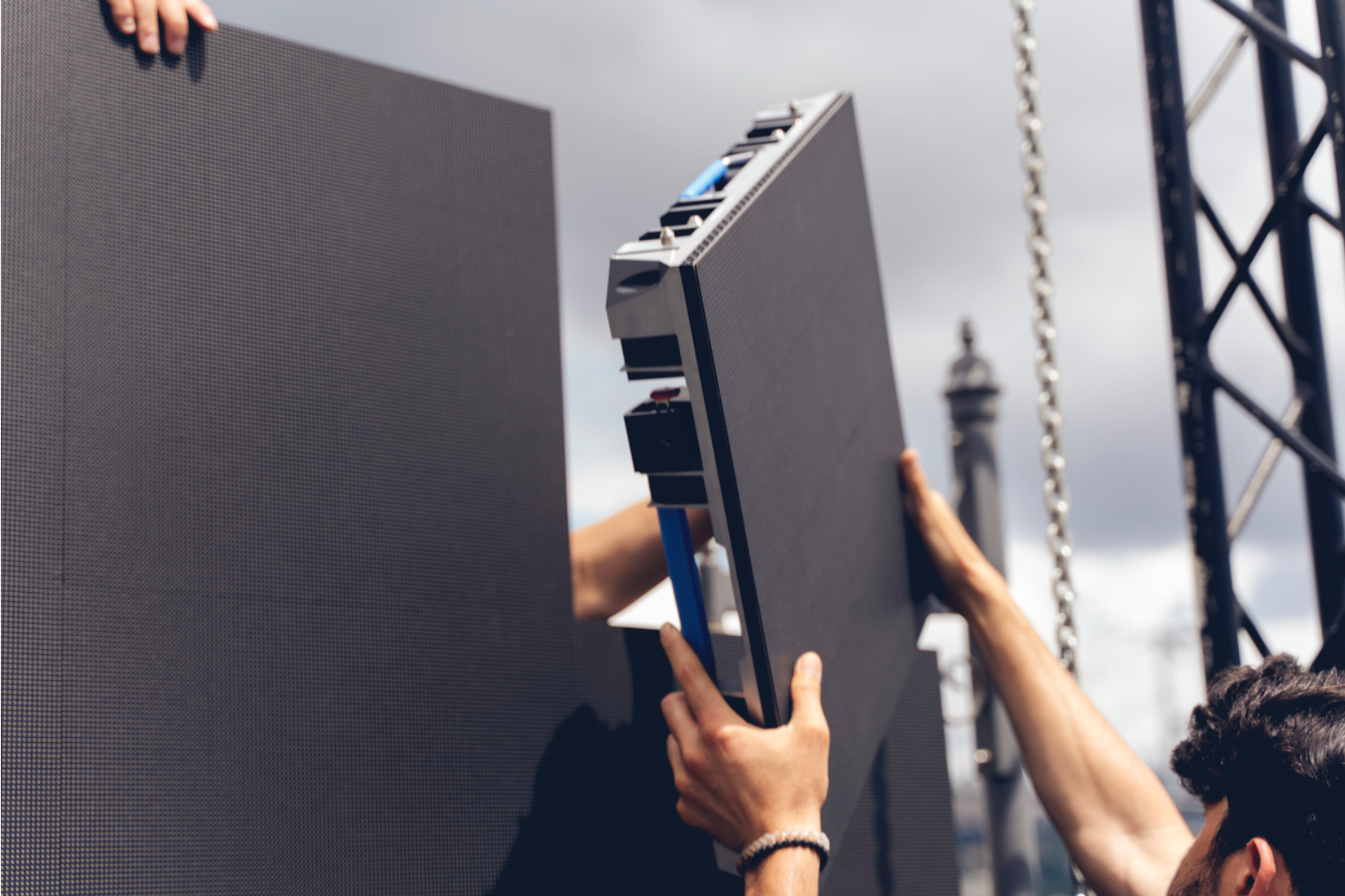
LED video walls consist of individual LED modules arranged together to form a seamless display surface. Each module contains thousands of tiny light-emitting diodes that produce color through a combination of red, green, and blue lights. When positioned side by side, these modules create a unified image with no gaps between them.
The pixel pitch, the distance between individual pixels, determines the wall's resolution and how close viewers can stand before they notice individual dots. A 2.5mm pixel pitch is tight enough for close viewing, while a 6mm pitch works well for audiences further back. This modularity means you can build displays of virtually any size by adding or removing modules.
Understanding Projection Technology
Projection systems work by taking a digital signal and shining it through a lens onto a surface, typically a screen or wall. Modern projection has split into two camps: traditional LCD/DLP projectors and laser-based systems. The projector sits at a distance from the screen (the throw distance) and creates a bright rectangle of light that forms the image.
Laser projectors offer higher brightness and better color accuracy than lamp-based systems, but they cost significantly more upfront. The throw distance is a critical factor: you need enough space between the projector and screen, which isn't always available in constrained venues.
LED Walls: The Advantages
Brightness and visibility stand out as LED's primary strength. LED walls produce their own light and can reach 3,000 to 5,000 nits or higher, making them visible even in brightly lit spaces or outdoors. If your event includes natural sunlight or you're working in a venue with extensive windows, this matters tremendously.
The visual experience is also exceptionally clean. With no gaps between modules, there's no bleed or light spillage; what you see on the screen is exactly what you programmed. This creates a professional, polished appearance that matters for premium corporate events or broadcasts.
Installation flexibility is another real benefit. Because LED walls are modular, they adapt to unusual spaces and shapes. You can create curved walls, hanging displays, or floor installations that would be difficult or impossible with projection. The footprint is compact too: you're not losing valuable venue space to a projector throw distance.
The LED Video Wall Trade-offs
Cost represents the most significant barrier to LED adoption. A quality LED wall installation can be quite a bit more expensive than a projection set up depending on size and pixel pitch.
Maintenance and technical expertise are also considerations. LED walls require specialized technicians for repair and calibration. If something fails during your event, troubleshooting requires technical knowledge beyond what standard AV companies might offer.
Setup and teardown time can be longer than projection. While modular design allows flexibility, physically assembling a large LED wall takes hours and careful alignment. Weather can also affect LED equipment if you're outdoors, and extreme temperatures impact performance.
Projection Systems: The Advantages
The cost advantage is a pro for the projection system, making it more accessible for small to mid-sized events with tighter budgets.
Setup is remarkably quick for projection systems as well. Once you position the projector and screen, you're ready to go. Troubleshooting is simpler because the technology is more straightforward. If something breaks, most AV companies can handle repairs.
Projection also gives you flexibility in screen size. You can project a 20-foot image or a 60-foot image with the same projector by adjusting the throw distance. This adaptability helps when you're not sure of exact specifications until the last moment.
The Projection Challenges
Ambient light sensitivity is projection's biggest limitation. Bright spaces wash out the image, leaving it dim and lacking contrast. You'll need to darken your venue, close blinds, or use high-output laser projectors (which brings cost closer to LED). This limits where you can use projection effectively.
Throw distance is another constraint. You need sufficient space behind the projector or above the audience. Some venues simply don't have this room. If your venue is long and narrow with limited depth, you may not be able to position a projector far enough back to fill your desired screen area.
Image quality suffers when viewers are too close or off-axis. The image degrades if people sit directly beneath the screen or to the extreme sides. LED walls maintain image quality from virtually any angle and distance.
Best Scenarios for LED Video Walls
LED walls excel in high-ambient-light environments. Outdoor events, spaces with large windows, or bright venues are where LED's brightness advantage justifies the investment. Major product launches, high-profile corporate events, and concerts often benefit from the visual impact LED delivers.
If you plan to have your content visible to a broadcast audience or plan large camera coverage, LED walls offer superior image quality for camera capture. They also work better for events where attendees will be very close to the screen.
When your venue has unusual geometry or you need a non-rectangular display shape, LED's modularity solves problems that projection can't address elegantly.
Best Scenarios for Projection
Budget-conscious events gain the most from projection. Training seminars, smaller corporate meetings, conferences with multiple breakout sessions, and local trade shows often use projection cost-effectively.
Projection works well in darkened spaces like auditoriums, theaters, and enclosed conference halls where lighting is controlled. If you're working in a traditional theater or ballroom with blackout capability, projection performs admirably.
Events where flexibility in screen size is critical benefit from projection. If your exact needs are still being finalized, projection offers easier adjustment than committing to a specific LED wall configuration.
Hybrid Approaches
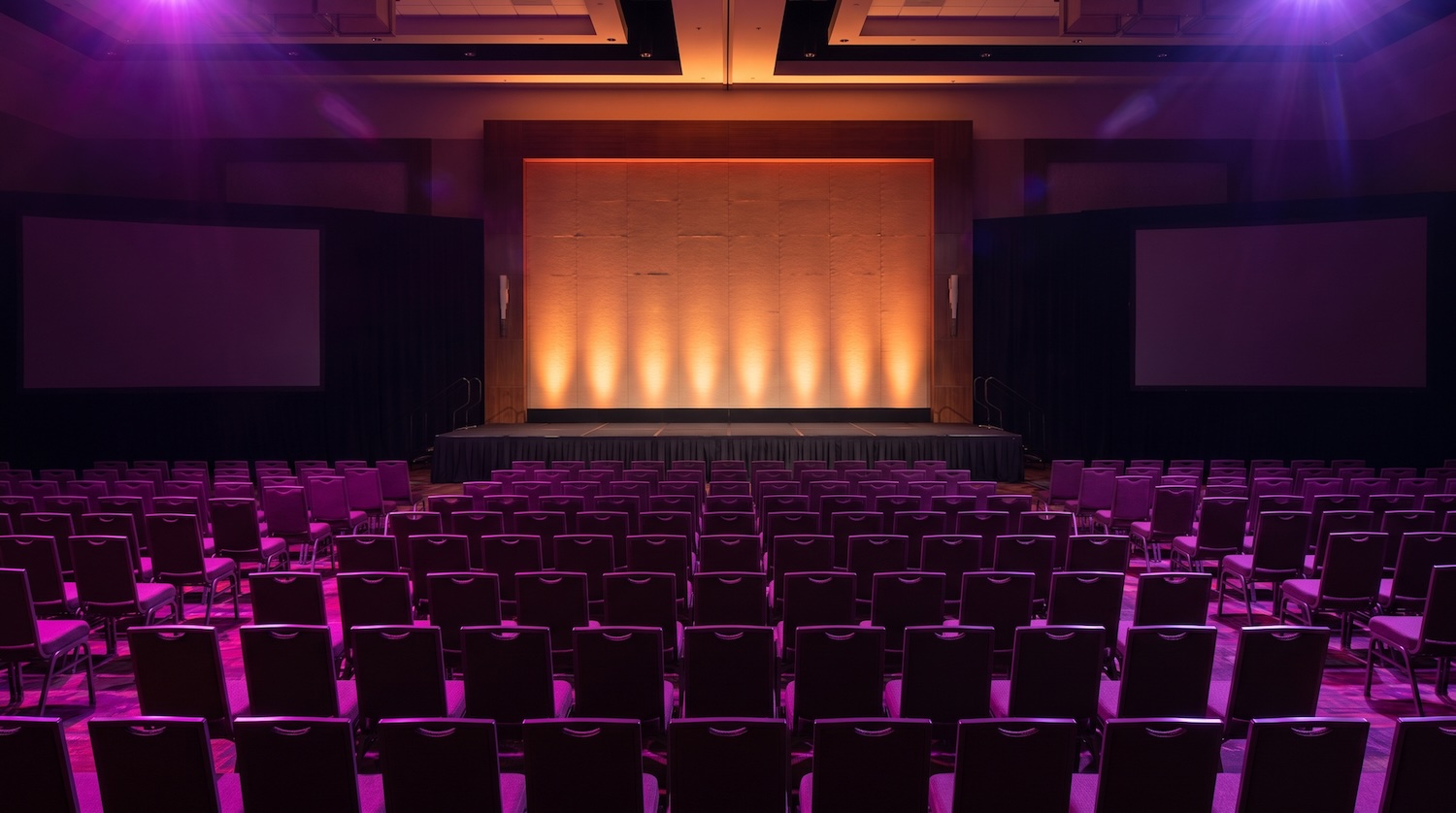
The most sophisticated events often combine both technologies. A main stage might feature LED video walls flanked by projection screens for secondary content. A large conference might use LED for the main auditorium and projection in breakout rooms.
Hybrid setups allow you to deliver impact where it matters most while controlling costs elsewhere. They also provide redundancy: if one system encounters an issue, your event continues with the backup display.
Making Your Decision
Start by assessing your venue's ambient light conditions. If you can't control brightness, LED becomes necessary. Next, evaluate your budget, which often makes the decision straightforward. Consider your content too; dramatic, high-impact visuals favor LED, while information-heavy presentations work fine with projection.
Think about your audience distance and sightlines. If people will sit very close or at extreme angles, LED wins. For moderate viewing distances with reasonable sightlines, either technology works.
Timeline matters as well. If you're planning months in advance, LED walls offer time to transport and install. If your event is weeks away, projection's faster setup becomes valuable.
Why Consult Creative Day
Making this choice involves technical details that affect both your budget and your event's success. LED walls and projection systems continue to evolve, with new brightness levels, resolution options, and hybrid solutions constantly changing what's possible.
At Creative Day, we've worked with event planners and corporate coordinators on hundreds of projects across diverse venues and budgets. We understand the real-world constraints you face, whether that's a narrow throw distance, fluctuating ambient light, or needing to support last-minute content changes.
Rather than pushing one technology, we assess your specific situation. We can walk you through the actual performance you'll see with each option in your venue, discuss realistic costs including setup and technical support, and help you avoid expensive mistakes.
When you're ready to move forward, we handle design, installation, and support to ensure your event's visual elements perform flawlessly. Contact us to discuss your project and get specific recommendations based on your venue, budget, and goals.
Your event's visual technology should enhance your message, not distract from it. Whether LED video walls or projection is the right choice depends on your unique circumstances. The time you invest in making the right decision will pay dividends in the final result.