Event Technology Services that Elevate Your Event
"We just need a screen and a couple of microphones." Every event planner has said some version of this, usually about a week before discovering that the screen needs a media server, the microphones need a mixing console, and someone has to run all of it without missing a cue. Modern events run on more technology than most people realize, and the gap between a polished show and an awkward one usually comes down to how well that technology is planned and operated.
That is where event technology services come in. Below is a practical look at what those services actually include, why they matter for corporate events, and how to tell the difference between renting equipment and hiring a production partner who makes it all work together.
What Are Event Technology Services?
Event technology services are the planning, equipment, and on-site expertise that power the audio, visual, and digital elements of a live, virtual, or hybrid event. That covers everything from the sound system and stage lighting to LED video walls, presentation graphics, live streaming, and the technical crew who run it all during the show.
The important distinction is between gear and service. Anyone can rent a projector. Event technology services include the people who specify the right equipment for your room, integrate it into a single system, rehearse it against your agenda, and operate it live so nothing falls apart in front of your audience. At Creative Day, we treat the technology as a means to an end: your message lands, and the audience never has to think about how.
The Core Event Technology Services
Most corporate events draw on the same handful of disciplines. Here is what each one does and why it matters.
Audio Production
Audio is the service people notice only when it fails. Good audio production covers microphone selection (lavalier, handheld, headset), a mixing console and an operator to ride levels, speaker placement matched to the room, and backup systems for the moment a wireless mic drops out. For a panel discussion or a keynote, clean, intelligible sound is the difference between an engaged room and a restless one.
Lighting Design
Lighting shapes how an event feels and how it reads on camera. A proper lighting design lights presenters so they look their best, adds color and movement to set the tone, and directs attention to the stage. It also solves practical problems: a speaker washed out by a window or lost in shadow undercuts even the strongest content.
Video and LED Walls
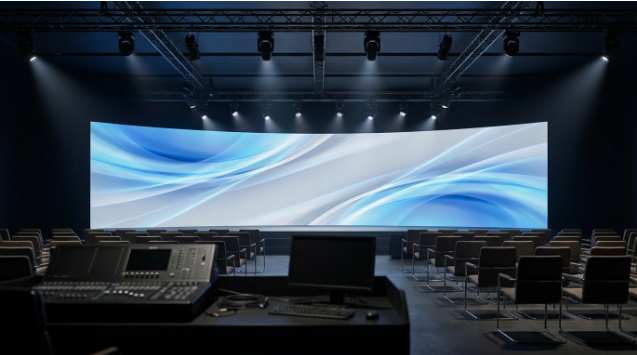
Video services handle what your audience sees on screen, from slide content and speaker camera feeds to large-format LED video walls and projection. LED walls in particular have become a default for corporate stages because they stay bright in a lit room and create a high-end backdrop. If you are weighing your options here, our breakdown of LED video walls versus projection screens walks through the trade-offs.
Live Streaming and Hybrid Delivery
Live streaming extends your event to people who cannot attend in person, and it is now a standard request rather than a special one. Done well, it treats remote attendees as a first-class audience instead of an afterthought: dedicated cameras, a clean program feed, captioning, and a platform that holds up under load. Remote viewers can always tell when they were tacked on at the last minute.
Content and Graphics Production
Content production covers the motion graphics, lower thirds, speaker support slides, sizzle reels, and animated transitions that give an event a finished, branded look. Strong content production ties the visuals together so the show feels like one cohesive piece rather than a series of disconnected slides.
Staging and Technical Direction
Staging is the physical foundation: the stage decks, set pieces, trussing, and rigging that everything else hangs on. Technical direction is the brain that coordinates it. A technical director builds the run of show, calls cues live, and keeps audio, video, and lighting in sync so the event moves the way it was planned.
Equipment Rental vs. a Production Partner
The biggest decision is not which projector to rent. It is whether you are assembling vendors or hiring one accountable partner. When you rent equipment from several suppliers, the coordination falls on you: making sure the audio company and the video company are using compatible signals, that someone is on-site to troubleshoot, and that there is a plan when something breaks.
A production partner replaces that juggling act with a single point of contact. One team specs the equipment, integrates it, rehearses it, and runs it. If a cable fails at 9 a.m., you are not calling three different vendors and hoping one picks up. That single line of accountability is the real product of full-service event technology, and it is why a partner usually costs less in stress and rework than the line-item savings suggest.
How to Choose an Event Technology Partner
Use these criteria to separate a true partner from a gear-rental shop:
- Range of services: Can one team handle audio, video, lighting, and streaming, or will you stitch together specialists yourself?
- Technical staff, not just inventory: Ask who is operating the equipment live and what their experience is. People run the show, not the gear.
- Redundancy and backups: A serious partner plans for failure with backup mics, spare media servers, and a redundant stream.
- Rehearsal as standard: A technical rehearsal that runs your actual content against the actual setup is non-negotiable for anything high-stakes.
- Relevant experience: Look for work on events like yours. Our case studies show how these pieces come together at scale.
Working With a Production Partner
The smoothest events start the conversation early. When a production partner is involved during planning rather than dropped in the week of the show, they can shape decisions about room layout, agenda timing, and what is realistic on your budget. They build the run of show, schedule load-in, run a technical rehearsal, and then operate everything live so your team can focus on the content and the guests.
That is the whole point of event technology services done right. The technology fades into the background, and what stands out is your message and the experience your audience walks away with.
Frequently Asked Questions
What is included in event technology services?
Event technology services typically include audio production, lighting design, video and LED walls, live streaming, content and graphics production, staging, and the technical crew who plan, integrate, and operate all of it during your event.
Do I need a production partner or can I just rent equipment?
Renting equipment can work for very simple setups, but as soon as you combine audio, video, and lighting, coordination becomes the hard part. A production partner gives you one accountable team that integrates and operates everything, which reduces the risk of something failing live.
How early should I bring in an event technology team?
As early as possible, ideally during initial planning. Early involvement lets the team influence room layout, agenda timing, and budget decisions, and gives enough runway for proper rehearsals before the event.
Can event technology services support hybrid and virtual events?
Yes. Live streaming and hybrid delivery are core services, including dedicated cameras, a clean program feed, captioning, and a reliable platform so remote attendees get a first-class experience rather than an afterthought.
Bring the Right Technology to Your Next Event
The right event technology services turn a complicated production into something that simply works. Creative Day Technologies specializes in audio-visual and event production for businesses across the United States. From intimate webinars to large-scale conferences, we handle the technical complexity so you can focus on your message. Contact us today to schedule a consultation with one of our event production experts.