Creating Memorable Brand Experiences
July 27, 2026
Every interaction a person has with your company tells a story. The colors on your website, the way your booth smells at a trade show, the energy in the room during a product launch, the follow-up email after a conference. Brand experience encompasses all of it: the sensory, emotional, and intellectual impressions that shape how people feel about your organization. It is not a single touchpoint but a continuous thread that connects every moment of contact between your audience and your brand.
For corporate event planners and marketing directors, understanding this concept is not optional. It is the foundation of every successful event strategy.
Why Brand Experience Has Become a Strategic Priority
The shift toward experiential marketing is not a trend. It is a structural change in how companies allocate budgets and measure success. Data shows that 77% of marketers now use experiential marketing as a core part of their brand strategy. That number has climbed steadily over the past decade as digital advertising becomes more crowded and less effective at creating lasting impressions.
The data from EventTrack research reinforces this point: 74% of consumers say that engaging with a branded event experience makes them more likely to purchase the promoted products or services. When people physically interact with a brand, they form stronger memories and deeper emotional connections than they do scrolling past an ad.
This is why smart companies treat events not as expenses but as brand experience investments with measurable returns.
Start with Brand Clarity, Not Production Details
One of the most common mistakes event planners make is jumping straight to logistics. They start choosing venues, lighting rigs, and AV equipment before answering a more fundamental question: what does this brand stand for, and how should that translate into a physical experience?
Before a single production decision gets made, the planning team should align on brand identity. What are the company's core values? What emotional response should attendees walk away with? What visual language, tone, and energy level match the brand?
A financial services firm launching a new advisory platform needs a very different brand experience than a sportswear company unveiling its latest product line. The production elements that support each story will differ dramatically. Getting this clarity first prevents expensive mismatches between brand promise and event execution.
Live Events as the Ultimate Brand Experience Platform
Digital channels are excellent for reach. But when it comes to depth of connection, nothing competes with live, in-person events. Conferences, trade shows, product launches, and experiential pop-ups create environments where people engage with all their senses simultaneously.
A well-produced conference does more than deliver information. It immerses attendees in the brand's world. The lighting sets the mood. The audio quality communicates professionalism. The stage design reinforces visual identity. Even the pace and rhythm of the programming reflect brand personality.
This is where production quality becomes a direct expression of brand quality. When an audience walks into a room with crisp, well-designed visuals, clear audio, and thoughtful staging, they unconsciously associate that polish with the brand itself.
How Production Quality Shapes Perception
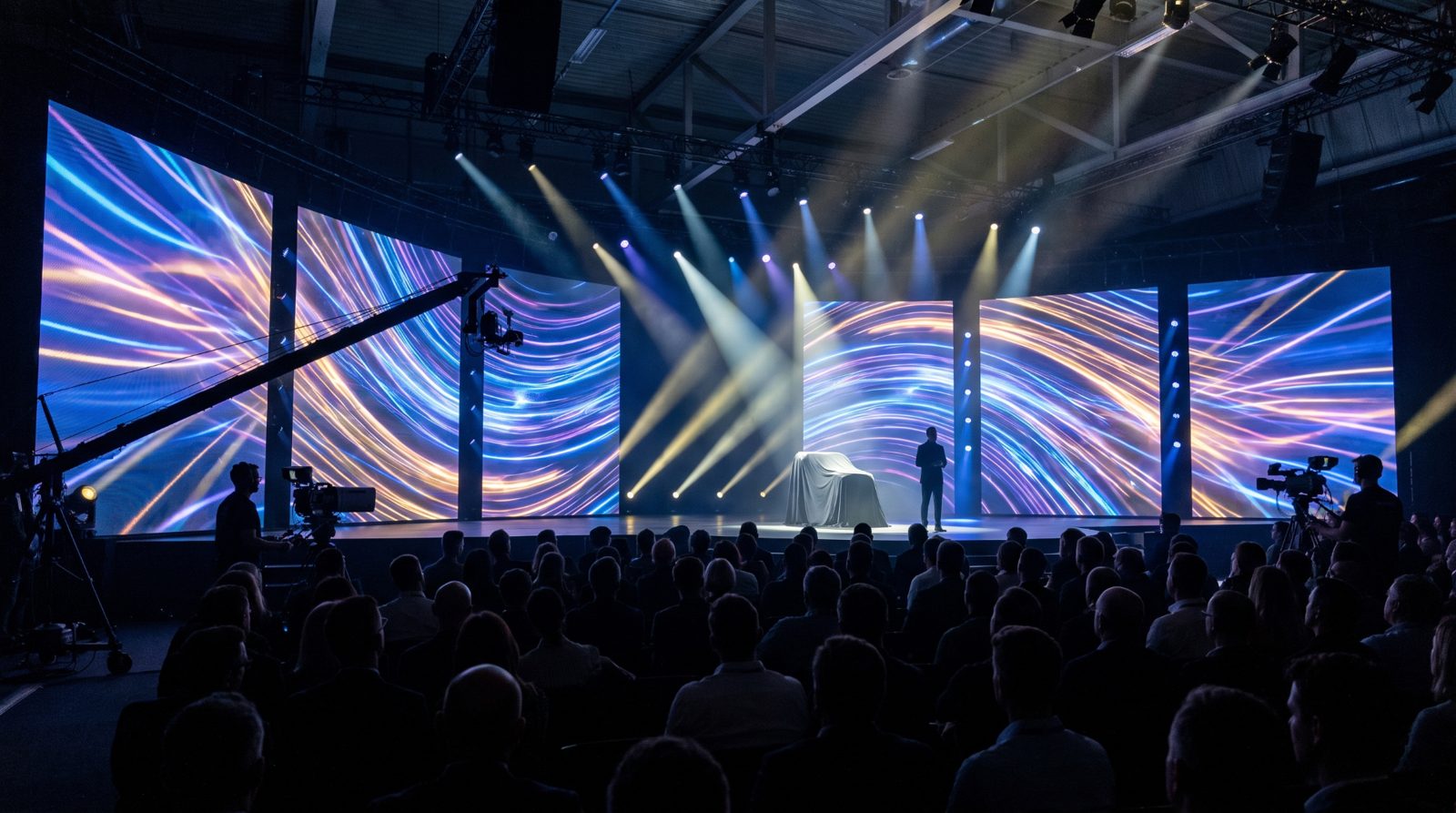
Consider how Apple approaches product launches. Every element is controlled: the minimalist stage, the precise lighting, the carefully timed reveals. The production does not just showcase the product. It reinforces Apple's brand promise of simplicity, innovation, and premium quality. Samsung takes a different approach with larger, more dynamic productions featuring massive LED displays and elaborate demonstrations, reflecting its brand identity as a technology powerhouse.
These companies understand that the production is the brand experience. A poorly lit stage, a microphone that cuts out, or a cluttered visual presentation sends the message that the brand does not care about details. That perception is hard to undo.
For product launches specifically, production quality drives the entire audience arc. Creating anticipation through teaser content and countdown sequences. Building to a reveal moment that feels genuinely exciting. Then transitioning into hands-on engagement where attendees can interact with what they have just seen. Each phase requires different production techniques, and each one shapes the overall brand experience.
Event Technology as an Amplifier
LED video walls, projection mapping, augmented reality, interactive touchscreens, and hybrid event platforms have expanded what is possible in event production. These tools can transform a standard conference room into an immersive environment that reinforces brand messaging at every turn.
But there is an important principle that separates great events from flashy ones: technology should support the story, not become the story. A projection-mapped stage is spectacular, but if it does not connect to the brand's message, it is just expensive decoration.
The best brand experience strategies use technology to amplify human connection. Interactive touchscreens at a trade show booth let attendees explore products at their own pace. Hybrid event platforms extend the brand experience to remote audiences who cannot attend in person. AR overlays can add layers of information to physical products during a launch event.
Creative Day Technologies takes this approach with their event production work, combining LED walls, projection mapping, and interactive elements in ways that serve the client's brand narrative rather than simply showcasing the technology itself.
Measuring Brand Experience Impact
A brand experience strategy without measurement is just a party. To justify investment and improve over time, event planners need concrete metrics.
Post-event surveys remain one of the most direct measurement tools. Ask attendees specific questions about brand perception before and after the event to quantify shifts in awareness and sentiment.
Social media engagement provides real-time feedback. Earned media value (EMV) calculates the equivalent advertising spend you would need to generate the same amount of organic social coverage your event produced.
Lead generation metrics connect brand experience directly to revenue. How many qualified leads came from the event? What was the cost per lead compared to other channels? Net Promoter Score (NPS) surveys measure whether attendees would recommend the event or the brand to colleagues. Attendee retention rates for recurring events show whether each year's brand experience is strong enough to bring people back.
The most effective measurement approach combines multiple data points. A single metric never tells the full story. Track several in parallel to build a complete picture of how your brand experience strategy is performing.
Choosing the Right Production Partner
The gap between a good event and a great brand experience often comes down to the production partner. The right partner brings both creative vision and technical expertise, understanding how to translate brand strategy into physical environments that move people.
Look for a team that asks about your brand before they ask about your budget. A partner who leads with questions about audience, objectives, and brand identity will deliver a more cohesive result than one who leads with equipment lists.
Creative Day exemplifies this approach, working with corporate clients nationwide to build events where every production element, from stage design and lighting to video content and interactive technology, connects back to the client's brand story. Our ability to handle both the creative and technical sides of production means fewer gaps between vision and execution.
A strong brand experience does not happen by accident. It requires intentional planning, quality production, smart use of technology, and consistent measurement. When all of those elements align, the result is an event that does not just inform your audience but genuinely changes how they feel about your brand.
Creative Day Technologies builds brand experiences for corporate clients nationwide, connecting every production element back to your story. Contact our team to start planning your next event.